A Cool Roof Is Not a Colour: Specify Aged Performance and Protect the Assembly
A practical acceptance plan for Iranian projects that connects aged solar reflectance, roof condition, installation quality, dust-aware maintenance, and measured operating outcomes.
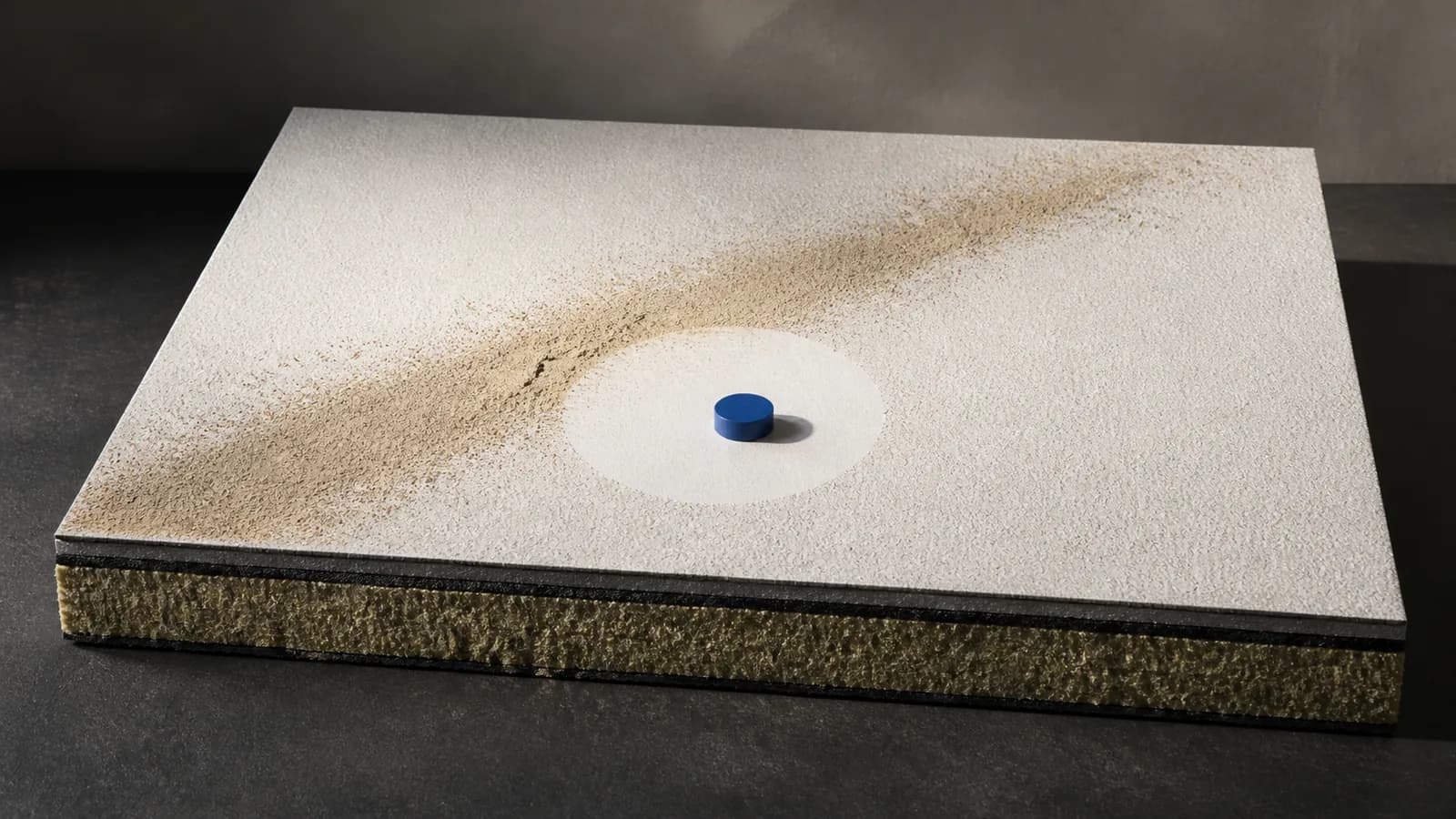
Colour is visible; thermal performance must be measured
A cool roof limits solar heat gain through two surface properties: solar reflectance, the fraction of incident solar energy reflected, and thermal emittance, the ability to release absorbed heat by thermal radiation. The current ANSI/CRRC S100-2025 standard defines consistent specimen preparation and methods for initial and aged radiative properties. ASTM D7897-26, active since July 2026, provides an accelerated laboratory soiling and weathering practice intended to simulate the three-year-aged properties used by rating programmes. [1][2]
The practical shift for an Iranian owner or designer is from a colour clause to a performance-and-assembly decision. A white sample can lose reflectance, a bright coating can detach from an unsuitable substrate, and a thermally effective finish can still sit above wet insulation or failed flashing. Specify what the exposed surface must do after ageing, but accept the roof only when the whole water, air, thermal, structural, drainage, and maintenance strategy works together.
Screen the roof zone before selecting a target
DOE, EPA, and PNNL guidance agrees on the direction of the effect: high reflectance and emittance can reduce heat transferred through a sun-exposed roof, but the value depends on climate, insulation, roof type, building operation, and heating and cooling systems. Cool roofs generally offer more cooling benefit in hot conditions and may reduce useful winter solar gain in colder conditions. EPA also advises treating insulation and air sealing as complementary measures rather than assuming the surface finish acts alone. [6][7][8]
Do not assign one imported reflectance threshold across Iran. Screen each zone by solar exposure, winter heating, insulation continuity, use below, HVAC efficiency and schedule, internal loads, drainage, shade, rooftop plant and photovoltaics, access, glare, and remaining membrane life. A Bandar Abbas warehouse, Tehran hospital, and seasonal Tabriz building require different models even with the same product label.
Model the base roof and proposed aged surface with agreed weather, actual schedules and assembly, and only decision-date verified tariffs. If credible simulation is unavailable, instrument a controlled pilot. Choose on lifecycle balance: cooling, winter effect, waterproofing risk, access, maintenance, water, replacement timing, and operational resilience—not maximum laboratory reflectance.
- Prioritise highly exposed roofs over spaces where overheating, cooling demand, or loss of service has a measurable consequence.
- Coordinate a reflective retrofit with scheduled membrane renewal; do not consume access and warranty value on a roof near failure without a documented reason.
- Map shaded, trafficked, ponding, equipment, photovoltaic, drain, and future-penetration zones instead of treating the roof as one uniform area.
- Record who owns the energy model, roof-design decision, waterproofing acceptance, cleaning policy, and post-occupancy measurement.
Buy aged, traceable properties—not a paint description
CRRC S100 distinguishes initial properties from aged properties measured after field exposure or permitted laboratory exposure. ASTM D7897-26 recognises that soot, dust, microbiological growth, sunlight, precipitation, dew, and material change can alter roof reflectance; its accelerated method covers products including coatings, membranes, modified bitumen, shingles, tiles, and metal. This is why an initial colour chip or an undated catalogue value is weak procurement evidence. [1][2]
Require the exact product and surface, formulation reference, laboratory, specimen preparation, initial and aged reflectance and emittance, method edition, exposure route, test date, and limits. Link approval to delivered batches and installed zones. Without a recognised local rating, require representative coupons and a competent laboratory plan; never call an untested value certified.
ASTM C1549 permits periodic laboratory or field measurement of flat opaque surfaces with a portable solar reflectometer and notes that surface variability governs how many readings are meaningful. Use it only within its scope and with a sampling plan that defines locations, surface preparation, calibration, environmental conditions, reporting, and uncertainty. The responsible energy and envelope specialists must set project limits; a test method tells the team how to measure, not what Iran-specific value to accept. [3]
Do not let the cool finish hide a failing roof
ASTM D7120/D7120M-10(2022) separates evaluation and preparation of a non-aggregate roof membrane for coating from the design and installation of the roof assembly. That boundary matters: a coating-selection exercise does not establish that the existing membrane, insulation, deck, drainage, flashings, penetrations, movement joints, edges, or attachment are fit to remain in service. [4]
Before approving a retrofit, review leaks and service history; map ponding and repairs; verify drainage; investigate suspect wet insulation; assess membrane condition, adhesion and compatibility; check parapets, curbs, drains and penetrations; and confirm wind, fire, access, structural and warranty constraints. Open representative areas where risk justifies it. Design the investigation and repair for the actual roof.
Use a site mock-up on the prepared substrate, including a seam, a change of material, and one representative detail. Agree cleaning and priming, reinforcement, application rate or finished thickness, curing conditions, adhesion evidence, appearance tolerance, and destructive-test repair before production. Reject the seductive shortcut: reflective coating is not a generic leak repair, and dry-looking surfaces do not prove that concealed layers are dry.
- Release the coating only after roof defects are classified as repairable, replaceable, or acceptable with a named residual risk.
- Separate waterproofing acceptance from radiative-property acceptance; both must pass and neither substitutes for the other.
- Protect drains, joints, terminations, plant clearances, walkways, fall-protection anchors, and future maintenance routes in the detail set.
- Require written compatibility across membrane, primer, coating, sealant, reinforcement, repair material, and adjacent metals or plastics.
Commission the installed roof, not the delivered containers
ASTM D7186-25 treats quality-assurance observation as a documented comparison of roof construction or repair with the contract scope, accepted roofing practice, and project documents. It defines observer responsibilities and distinguishes independent quality assurance from the contractor's own quality control. The standard covers observation and reporting, not investigation of the pre-existing roof and not construction safety monitoring. [5]
Build the inspection plan around irreversible work: substrate and repairs before concealment; mock-up; batch, shelf-life, weather and surface checks; relevant wet or dry film controls; reinforcement and details; intercoat windows; cure before traffic; reopened drains; completed terminations; and repaired test locations. Record zone, date, crew, materials, measurements, deviations, disposition, and release.
At handover, preserve the approved product evidence, as-built zone map, application records, weather log, test results, colour-repair rules, compatible future materials, access and cleaning constraints, warranty conditions, and baseline photographs. A thermal image may help diagnose patterns when captured under a controlled plan, but it does not by itself prove solar reflectance, dry insulation, adhesion, energy savings, or watertightness.
- Zero unresolved waterproofing or safety-critical deviations at release; list any cosmetic or monitored exception with an owner and date.
- Verify application quantity against measured roof area and recorded waste, then reconcile it with the product-specific thickness evidence.
- Sample high-risk edges, details, repaired zones, and changes of substrate—not only the open field that is easiest to coat.
- Give facility staff a roof map and approved maintenance method they can use offline at the point of work.
Manage dust by evidence, not a fixed washing calendar
ASTM D7897-26 reports that initial reflectance often changes within the first one to two years as roofs soil and weather. EPA identifies periodic cleaning as a possible ongoing cost, particularly for low-slope roofs, while DOE advises regular examination and maintenance or cleaning when necessary and appropriate. None of this makes frequent washing automatically economical, safe, compatible, or responsible in a water-constrained operating context. [2][6][7]
Create roof-specific triggers. Inspect after commissioning, before the hot season, after severe dust or drainage events, and alongside normal waterproofing inspections. Photograph fixed reference zones and trend a representative reflectance sample where the instrument, surface, and method are suitable. If performance appears to fall, clean a small controlled test patch first; compare reflectance, surface temperature under comparable conditions, water and labour use, coating damage, slip risk, and runoff handling before authorising a full wash.
Prefer housekeeping that removes loose debris, keeps drains open, controls rooftop trade damage, and addresses local contamination at its source. Any cleaning method must follow product instructions and project safety, environmental, drainage, and water rules. Abrasive tools, incompatible chemicals, uncontrolled pressure, or walking unprotected routes can sacrifice the membrane to improve a number on the surface. Maintenance should restore useful performance without shortening roof life.
Pilot one consequential zone and measure the whole decision
Pilot a representative, accessible roof zone over a consequential upper-floor space. Before work, record assembly, defects, insulation evidence, drainage, indoor use, HVAC schedule, surface condition, energy or temperature sensors, and the weather-normalisation method. Install the accepted repair and finish through the full inspection plan. Keep an untreated comparison zone only when it is technically, contractually, and operationally defensible; otherwise compare a calibrated baseline with the completed condition.
Use three scorecards. Delivery quality: first-pass substrate acceptance, defects per area, thickness or consumption compliance, open deviations, drain and detail closure, and handover completeness. Thermal outcome: aged or field reflectance where valid, roof surface temperature relative to ambient and solar conditions, upper-floor comfort or process temperature, and weather-normalised cooling demand or peak power. Operating burden: leaks, coating damage, inspection hours, cleaning water, access events, and cost of maintaining the accepted condition.
Scale only when waterproofing remains sound and the measured benefit survives installation variability, dust, maintenance, winter consequences, and lifecycle cost. The point of view is simple: the valuable cool roof is not the whitest roof on opening day; it is the roof whose aged radiative performance, watertight assembly, maintainable details, and verified operating outcome remain aligned. Applicable Iranian requirements, the signed contract, site conditions, manufacturers, and responsible envelope, structural, fire, safety, energy, and facility professionals control the final design and acceptance.
Sources & further reading
These primary sources support the claims and implementation frameworks used in this field note.
- 1. ANSI/CRRC S100-2025 — Standard Test Methods for Determining Radiative Properties of Materials
Cool Roof Rating Council
- 2. ASTM D7897-26 — Laboratory Soiling and Weathering of Roofing Materials
ASTM International
- 3. ASTM C1549-16(2022) — Solar Reflectance Using a Portable Solar Reflectometer
ASTM International
- 4. ASTM D7120/D7120M-10(2022) — Evaluation and Preparation of Roof Membranes for Coating Application
ASTM International
- 5. ASTM D7186-25 — Quality Assurance Observation of Roof Construction and Repair
ASTM International
- 6. Purchasing Energy-Efficient Cool Roof Products
U.S. Department of Energy — Federal Energy Management Program
- 7. Using Cool Roofs to Reduce Heat Islands
U.S. Environmental Protection Agency
- 8. Cool Roofs and Walls to Reduce Heat Gain
Pacific Northwest National Laboratory — Building America Solution Center
Sources were checked on 26 August 2026. They describe international test methods, practice, or requirements in their own jurisdictions; they do not create Iranian legal obligations. Final roof-system selection, acceptance limits, waterproofing details, safety, maintenance, and energy evaluation must follow governing requirements, the signed contract, actual climate and operation, manufacturer instructions, and responsible professional review.