Engineered Fill: Keep the Compaction Result Attached to the Soil
A percentage without the right soil reference and location can mislead. Plan fill acceptance around material identity, moisture, lift boundaries and evidence that survives the next layer.
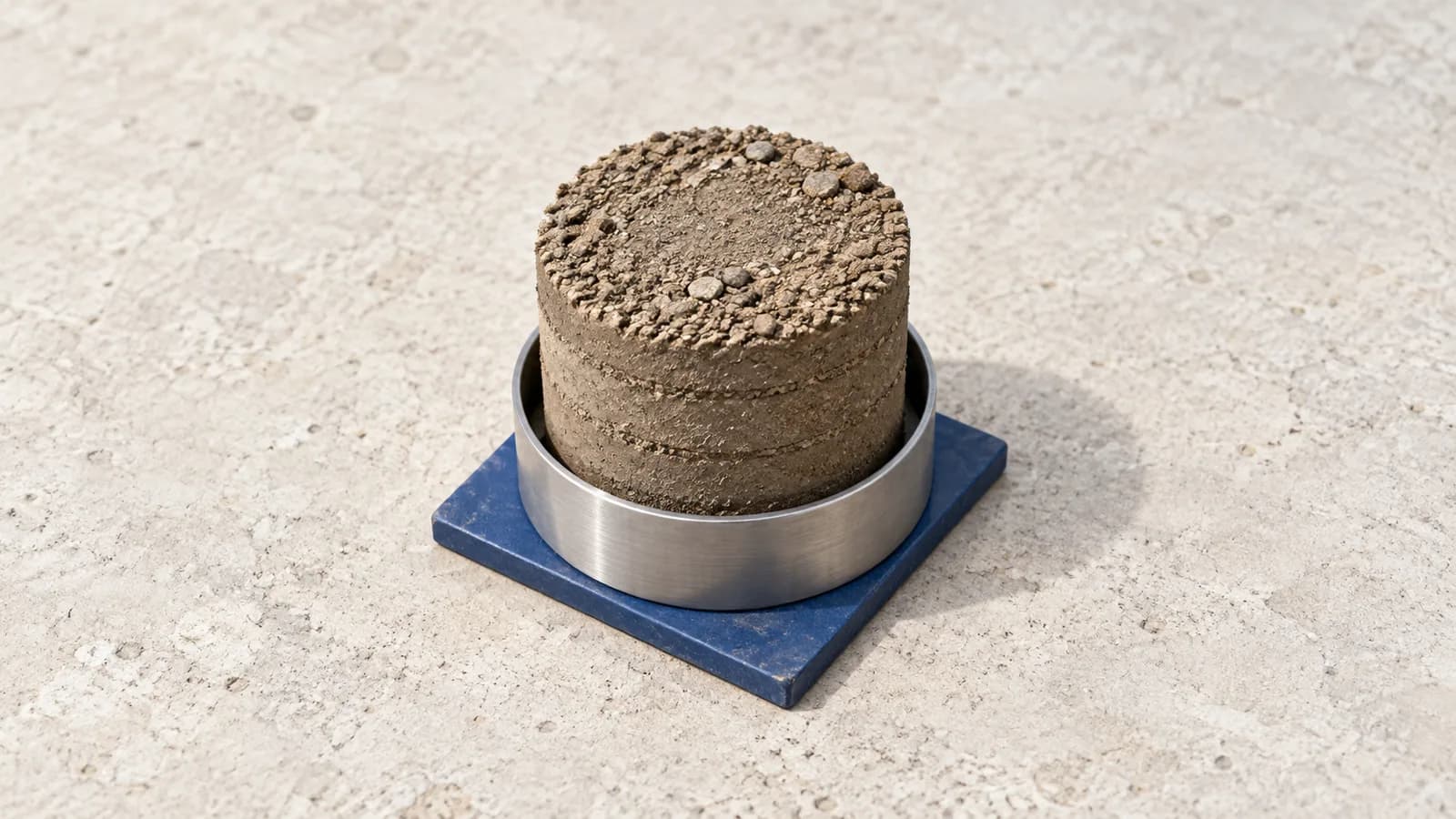
Start with the soil, the reference and the acceptance area
ASTM D698 links laboratory compaction testing to the density and water-content conditions needed for engineered fill. Its public scope describes a moisture–dry-unit-weight relationship under specified standard effort, rather than one maximum density applicable to every soil. [1]
OlbrichCo recommends a lift-by-lift acceptance plan before earthwork starts. Identify the fill’s intended function, approved material, underlying surface, layer boundaries and person authorized to release the next operation. Have the geotechnical engineer define the reference test, required compaction, moisture range and any additional performance checks. Keep these requirements together; a density percentage alone is an incomplete instruction.
Define a test lot as a mapped area of one lift with a stated material identity and construction period. Give it a unique identifier and elevation range. Agree how changes in source, soil character or placement conditions divide the lot. Record the sampling plan and decision rule before results arrive, including how marginal, missing or contradictory evidence will be handled.
For an Iranian project, confirm actual laboratory availability, sample transport time, suitable compaction equipment, water supply and inspection coverage for the planned shifts. Include restricted areas beside structures and services in the method review. Do not select a testing method or programme that depends on resources nobody has committed to provide. Keep ground-bearing slabs, roadways and structural backfill requirements distinct.
Do not carry yesterday’s laboratory curve into different soil
ASTM D1557 uses modified compactive effort, generally producing a different maximum dry unit weight and optimum moisture content from D698. Its public guidance also identifies oversize particles and particle degradation as potential problems for representative compaction control. [2]
Require each laboratory report to identify the sample, source or stockpile, sampling date, material description, method and edition, applicable procedure, moisture–density curve and reported reference values. Ask the laboratory to explain the method’s suitability and any permitted corrections. Link that report to the field lot; a report bearing only the project name is not sufficient identification.
Use the reference specified for that material and purpose. Do not interchange standard and modified effort, choose whichever reference makes a field result pass, or assume a universal conversion. If the specified test does not suit the actual grading or material behaviour, refer the control method to the geotechnical engineer before placement. Do not invent a correction factor on site.
At delivery and during spreading, check the approved identity against the material actually used. Escalate changed grading, mixed stockpiles, contamination or a new borrow source for review and any required resampling. Preserve the old reference and identify the affected lots. A changed laboratory result should trigger a traceable engineering decision, not silently rewrite the acceptance history of earlier work.
Prove a workable placement method on a representative area
Caltrans’ earthwork guidance relates inspection frequency to material and operational uniformity, with more attention to nonuniform or borderline work. It also addresses drying excessively wet material and checking that the resulting embankment remains firm and stable. [3]
Before repetitive placement, agree a representative trial with the contractor, geotechnical engineer and testing team. Record the actual material, supporting surface, loose and compacted layer thicknesses, equipment, operating pattern, moisture conditioning and results. Use the trial to establish a practicable work method within the design requirements, not to relax the specified acceptance criteria after seeing an inconvenient result.
Ask the contractor to propose how water will be distributed and mixed, how overly wet material will be handled, and how the condition will be checked before compaction. For a hot or windy workface, plan checks against actual drying observations; after rain or water ingress, reassess the affected area. These are site-specific planning questions, not a single climate assumption for Iran.
Review confined edges, utility crossings and changes in level separately rather than copying the open-area rolling pattern. Obtain approval for equipment access, vibration and loading near structures or buried services. Maintain the required testing frequency; increase scrutiny where variability warrants it through the agreed plan. A successful trial does not authorize unsupervised changes in lift thickness, equipment or material.
Make every field result reproducible and fit for its material
ASTM D6938 describes nuclear measurements of in-place density and water content, with assumptions about material homogeneity. Its public scope excludes clean gravel and clean crushed rock because surface voids can affect measurements. It is not a universal field method. [4]
Have the testing specialist select an appropriate approved method, with the required equipment checks, sampling depth, moisture determination and treatment of material limitations. Where nuclear equipment is proposed, require competent authorized personnel and confirmation of applicable safety and regulatory arrangements. This note provides no operating procedure or statement about Iranian licensing. Agree a suitable alternative when the proposed service cannot be provided.
For each result, retain the lot and test identifiers, coordinates or drawing reference, elevation, test depth, date, operator, instrument and method, moisture result, wet and dry density as applicable, reference report and calculated acceptance result. State units and any corrections. Require enough original data for a second competent reviewer to reproduce the decision rather than receiving only a green pass label.
Choose locations through the agreed sampling plan, not solely where the surface looks easiest to test. Record inaccessible areas and the approved way to address them. Separate representative acceptance tests from targeted investigation tests, and retain failed attempts. Do not repeatedly move the instrument around a failed location until a favourable reading replaces the original record.
Investigate a failed or unstable area before adding the next lift
FHWA’s construction guidance distinguishes density control from demonstrated engineering performance. It notes that proof rolling can reveal yielding zones even where density criteria have been met; it also treats moisture trends as useful evidence when diagnosing compaction problems. [5]
If a result fails, hold the defined affected area and review material identity, laboratory reference, moisture, measurement validity, layer thickness and support conditions with the responsible engineer. Determine the extent of the problem before selecting correction. Do not respond automatically with more roller passes, and do not lower the criterion to match the achieved result.
Where the engineer requires proof rolling or another performance check, obtain a task-specific approved plan for loads, route, observation and acceptance. Check structural, service and access constraints before mobilizing equipment. A passing density result does not cancel visible instability; equally, a visual impression does not replace required measurements. Escalate conflicting evidence and keep the area on hold until disposition is documented.
After an approved correction, retest to the agreed scope and retain the original failure, action and verification together. Distinguish valid failure from invalid testing; both need closure, but not necessarily the same remedy. Reinspect exposed accepted work after damage, uncontrolled traffic or a material change in condition before allowing it to be covered. Record who made that renewed release decision.
Hand over an acceptance map, not a folder of disconnected passes
Use a concise Persian lift register with an owner-held offline copy and a controlled digital version. Link each mapped lot to its material source, laboratory reference, field results, inspections, deviations and signed release. Show accepted, held and not-yet-tested areas separately. A photograph may help locate the work but should not become evidence of a measured property it does not show.
Measure the share of planned lots with complete valid acceptance evidence, first-presentation acceptance, unresolved failures by age, and work covered without release. Define denominators and retain failed tests so the figures cannot improve merely by deleting them. Track reference mismatches and report turnaround separately: they reveal whether the bottleneck is material control, execution, testing or authorization.
Put sampling access, laboratory attendance, standby decisions, corrective work and retesting responsibilities into the contract and programme. Compare actual project quotations and recorded rework effort when reviewing cost; do not promise a numerical saving. Start with one consequential fill zone and expand the record system after the team can retrieve and explain an entire lift’s acceptance history.
Applicable Iranian requirements, the contract, geotechnical design, site conditions and qualified local review govern the final method and limits. This article specifies no universal density percentage, moisture tolerance, lift thickness or testing frequency. Its intended outcome is narrower and verifiable: the next layer is placed over an identified area whose acceptance remains traceable to the right soil, evidence and authority.
Sources & further reading
These primary sources support the claims and implementation frameworks used in this field note.
- 1. ASTM D698-12(2021) — Standard-effort laboratory compaction (public scope and significance)
ASTM International
- 2. ASTM D1557-12(2021) — Modified-effort laboratory compaction (public scope and significance)
ASTM International
- 3. Construction Manual, Section 4-19 — Earthwork, especially 4-1903E Compaction
California Department of Transportation (Caltrans)
- 4. ASTM D6938-23 — In-place density and water content by nuclear methods (public scope and significance)
ASTM International
- 5. Geotechnical Aspects of Pavements, Chapter 8 — Construction and quality control
US Federal Highway Administration
Sources checked on 24 September 2026. ASTM references use public scope and significance statements, not the complete licensed procedures. US agency guidance supplies transferable principles, not Iranian requirements. Uncited workflow recommendations are OlbrichCo analysis. The responsible local engineer must approve project-specific methods, limits and safety arrangements; the cover is a conceptual miniature, not a test setup.